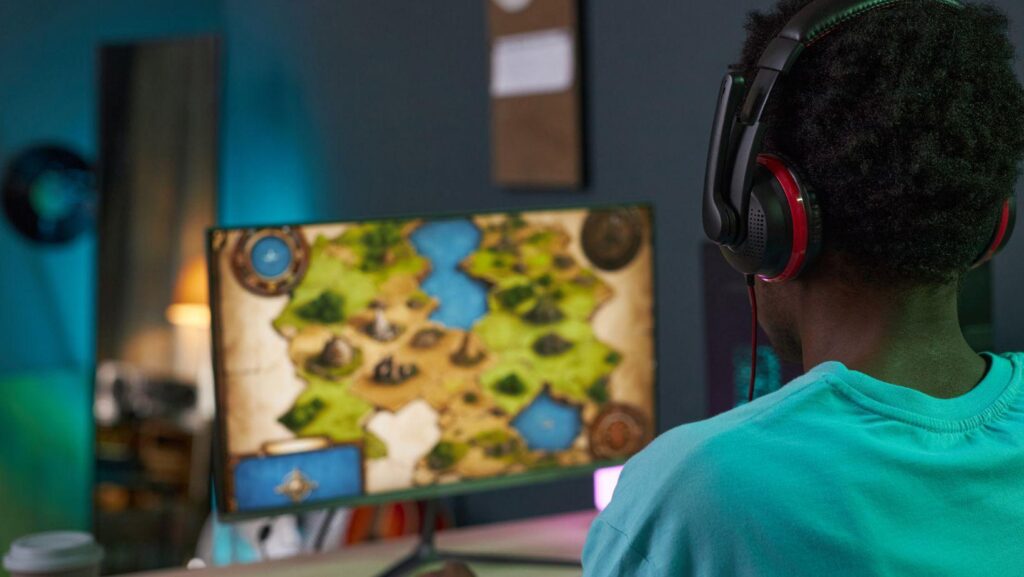
The online entertainment universe is changing rapidly, and if you like to enjoy the thrill of winning, the right setup makes all the difference. Your hardware often determines your success, be it climbing the ranks in a tactical shooter or exploring the endless potential at ufabet เว็บตรง. Upgrading your gear isn’t just some Glitzy holiday lights, it’s an investment into lower latency and better physical ergonomics for those nail biting sessions.
Why you should care about you gaming setup
A lot of gamers believe that the only thing that matters is their skill. While talent is enormous, even the best players can be held back by a mouse that stutters or a keyboard with ghosting issues. If you spend a good amount of cash on gear, it actually clears the “bottle necks” between your brains reactions and according actions happening on screen.
The Evolution of Gaming Keyboards
Keyboards have certainly evolved since their days as ubiquitous office peripherals in the 90s. Mechanical switches are the gold standard today. But it’s not only the “clicky” sound. It’s about what they call the actuation point the precise distance a key needs to be pressed for the command to generally be sent to your own computer.
Selecting a keyboard is not only highly subjective. Some like the linear feel “Red” switches provide for fast tapping while others want tactile feedback with “Brown” switches so they can type more accurately. Whatever you get, however, build quality should be prioritized in order to ensure that the device will last for years of heavy use.
High-DPI Mice and Precision Tracking
If the keyboard allows you to put the pedal to the metal, the mouse allows for steering. In the world of “Gaming & Gear”, the pursuit for a mouse that is worthy will never end. We have put the era of heavy, weighted mice behind us.” The reigning trend is superlight shells, frequently employing a honeycomb design to save every possible gram.
Important Mouse Specifications to Consider:
With most gaming mice running at 1000Hz, new models that boast 4000Hz or even 8000Hz for near-zero delay. The skates on the bottom of the mouse. Virgin PTFE is the smoothest glide on cloth pads.
Sensor Accuracy: Opt for something like the PixArt 3395, free from artificial acceleration and guaranteed to track flawlessly. What used to be the case for wireless is now a non-issue; with modern wireless technology actually being faster than wired connections.
To make faster flick shots and avoid wrist fatigue, you need your mouse lighter. If you find yourself overextending your targets, now is the time to decreased DPI and get a greater desk mat. The key to developing muscle memory is consistency in your physical movements.
Audio Immersion and Directional Sound
You can’t hit what you can’t hear. In competitive titles, sound cues footsteps, reloading sounds or sporadic gunfire in the distance — are critical intelligence. A decent pair of open-back headphones or a high-end gaming headset will give you a “soundstage” that feels three-dimensional.
Crucial Components of Gaming Audio:
Sound imaging: This is the capacity to determine precisely where a sound originates in three-dimensional space.
Some good specs to look for: Frequency response: A flat sound profile creates balance so heavy bass doesn’t overpower high-frequency sounds like footsteps.
Microphone Clarity: Clear communication with your team can be the difference between winning and losing.
DAC/Amp Needs: Some of the more premium headphones will require extra power to drive them properly.
Do not fall for “7.1 Virtual Surround Sound” marketing. A quality stereo image is often much more precise for enemy positioning compared to software-induced surround sound. Getting a dedicated standalone mic can also greatly enhance your “comms” and lend more professionalism to your setup.
Ergonomics and Long-Term Health
We spend a ton on the PC itself, and we forget all about the person sitting in front of it. Ergonomics is a necessity, not a luxury. Gamers who fail to consider their posture often face carpal tunnel syndrome and lower back pain.
Ergonomic Essentials for Your Station:
Lumbar Support: A chair needs to keep the natural curve of your spine so you don’t hunch over.
Monitor Arms: Keep Your Screen at Eye LevelPreventing a stiff neck or “gamer neck,” this is an essential if you’re using your computer for several hours a day.
So: Wrist Rests controversial, but a soft rest can help keep your wrist at a neutral angle when you’re not typing hard.
Adjustable Armrests: Your elbows should sit at a 90-degree angle, level with your desk.
Taking breaks is crucial as well. And no chair, good or bad, can help you if you sit for eight hours without a break. Moving your body every hour gets the blood flowing and keeps the brain sharp. A sharp mind makes faster reactions, no matter if you’re in a high-stakes match or just looking for gear reviews.
How High Refresh Rate Monitors Makes The Difference
If you are still playing on a 60Hz screen your game is different from everybody else. Going up to 144Hz or 240Hz is a complete game changer, the image becomes so much smoother that it’s much easier to track moving targets. It’s one of those situations where you don’t know how bad 60Hz is until you’ve experienced better.
Monitor Tech Breakdown:
Panel Type: IPS panels have the best colors, while TN panels are usually fastest (for response time).
G-Sync and FreeSync: These two technologies synchronize your monitor’s refresh rate with the frame-rate from your GPU, effectively obliterating screen tearing.
Input Lag: This is the time between when the monitor receives a signal to when it displays. Lower is always better.
Resolution vs. Performance: For most competitive gamers, 1080p or 1440p is the sweet spot for keeping frame rates up.
A high refresh rate doesn’t just make everything more aesthetically pleasing; it reduces system latency. If the screen updates more frequently, you’ll see where the enemy is about half a millisecond sooner. In a game of inches, those milliseconds matter.
Final Thoughts on Gear Optimization
Upgrading your equipment is a process, not an end point. You might not have to purchase everything at once. Tackle the most tactile objects first, such as your mouse and keyboard, then continue on to your monitor and audio. Rule is quality over quantity here. One awesome mouse is better than three terrible ones (that you paid for).
About The Author