You are one hit away from defeat. The final boss enters its last phase. You can secure survival with a defensive cooldown or risk everything on a high damage ability that could end the fight instantly. That moment of tension is not random impulse. It is structured decision making under uncertainty.
The same cognitive framework applies when deciding whether to hit or stand in Blackjack. While the environments differ, the psychological mechanics remain remarkably similar. Gaming culture has unintentionally trained millions of players in probability management, emotional control, and risk evaluation.
Understanding this overlap reveals why strategy gamers often approach risk based activities differently from casual participants.
Risk Assessment in the Gamer Mindset
Modern video games are complex decision systems. Competitive titles reward players who can interpret incomplete information quickly and act decisively.
When pushing a lane in a multiplayer arena, you evaluate map visibility, cooldown timers, and enemy positioning. In a battle royale, you assess weapon loadout, zone placement, and remaining players before engaging. Strategy games require evaluating resource allocation versus technological advancement.
Each decision involves probability estimation. You rarely possess complete information. Instead, you assign mental weight to outcomes based on prior experience.
Over time, this repetition conditions pattern recognition. Gamers internalize risk modeling subconsciously. They develop intuitive probability frameworks shaped by thousands of micro decisions.
This does not mean gamers are immune to poor judgment. It means they are accustomed to operating within volatile systems where outcomes are uncertain but not entirely random.
Probability as a Transferable Skill
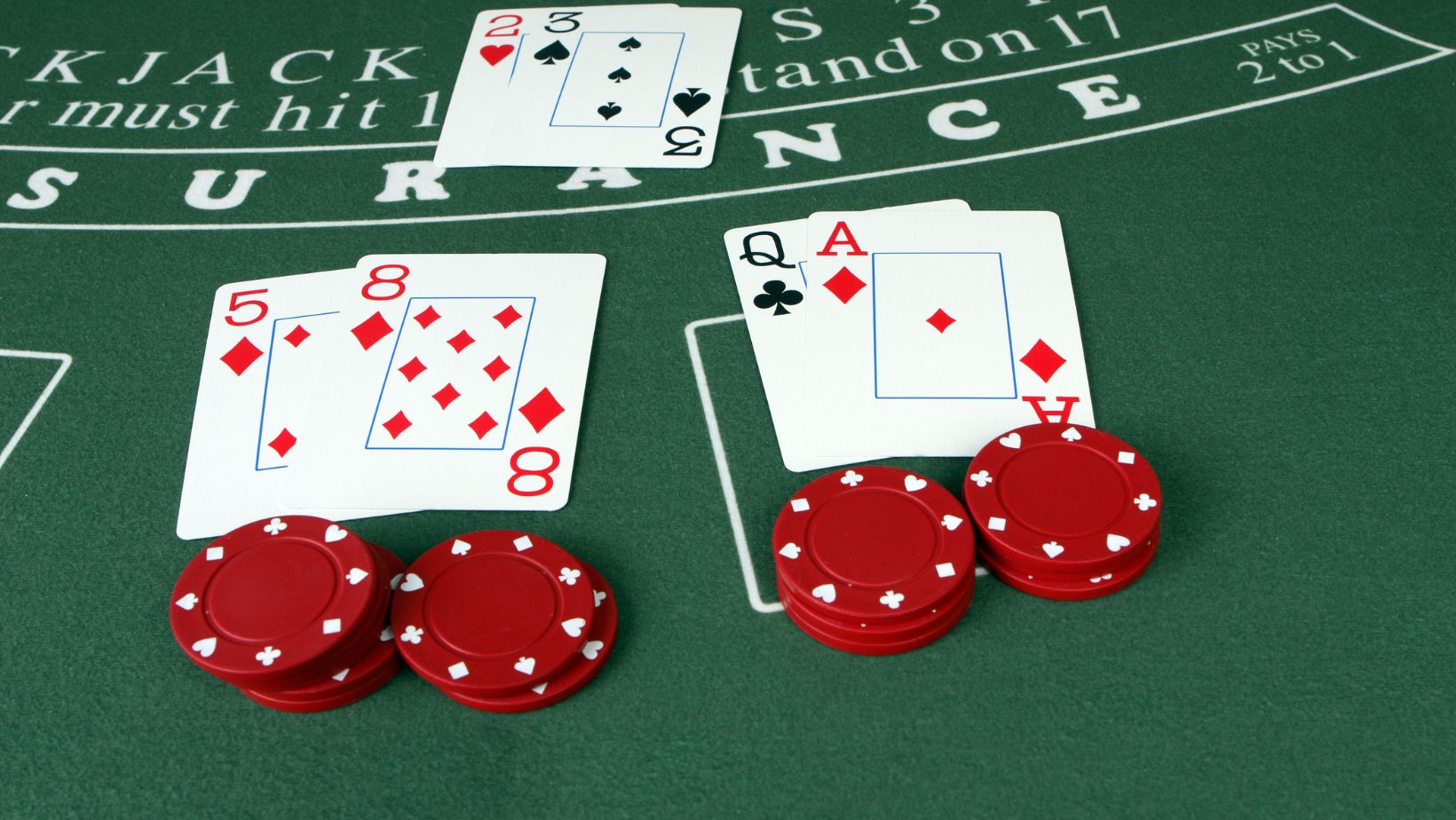
The structural similarity between gaming and card-based strategy lies in expected value thinking.
In Blackjack, you evaluate your hand and the dealer’s visible card. Certain decisions statistically produce higher long-term returns than others. Studying odds calculations in blackjack clarifies why some moves consistently outperform others over time.
This mirrors optimal play frameworks in competitive games. A professional esports player does not rely on instinct alone. They rely on data informed decision trees refined through analysis and repetition.
The concept of maximizing expected value translates directly. You may lose a single hand or match, but if your decisions consistently follow mathematically optimal guidelines, long term outcomes improve.
Gamers familiar with drop rate percentages and damage calculations often grasp this logic quickly. They understand that isolated outcomes do not invalidate the correct strategy. Variance does not negate probability.
The Emotional Component of Risk
Mathematics alone does not dictate behavior. Psychological biases influence decisions in both digital and real world contexts.
The Gambler’s Fallacy appears when players assume that past independent events influence future probabilities. In gaming, this might manifest as believing a rare item must drop after several failed attempts. In card play, it appears as believing a losing streak increases the chance of an imminent win.
Another common distortion is the Sunk Cost Fallacy. After repeated failed attempts at defeating a boss, quitting feels irrational because of invested time. In risk based environments, prior losses may encourage continued play to justify earlier decisions.
Gamers are also familiar with tilt. Tilt occurs when emotional frustration overrides rational assessment. Reaction speed increases, but strategic discipline decreases. In both gaming and card scenarios, tilt often leads to suboptimal decision making.
Recognizing these cognitive traps is critical. Experience with competitive gaming environments can strengthen emotional regulation, but only if players remain self aware.
Short Term Variance Versus Long Term Discipline
A key psychological distinction between casual and strategic participants lies in time horizon perspective.
In high variance systems, short term results fluctuate dramatically. A skilled player may lose multiple rounds despite correct decision making. Without long term perspective, this creates doubt in the system.
Gamers accustomed to ranking systems understand this concept. A single match does not define skill level. Performance must be evaluated across a larger sample size.
Similarly, optimal strategy in Blackjack or other probability-based games does not guarantee immediate success. It improves expected outcomes over time.
The ability to tolerate short term volatility without abandoning disciplined strategy is a learned cognitive skill. Competitive gaming environments cultivate this resilience.
Cognitive Load and Decision Speed
Another overlap lies in processing speed under pressure.
Fast paced games require players to interpret visual information and act within milliseconds. This trains rapid pattern recognition and risk calculation.
In card-based scenarios, while the tempo is slower, decision pressure remains present. The environment introduces stakes, time constraints, and social observations. Maintaining analytical clarity under such conditions reflects cognitive control developed through repeated high pressure gaming scenarios.
The ability to slow down emotionally while thinking quickly logically is a critical advantage in both contexts.
Risk as Structured Engagement
What distinguishes structured risk from reckless behavior is framework adherence.
Gamers who succeed in complex systems do not improvise randomly. They study mechanics, learn probability distributions, and execute established optimal patterns.
The same principle applies to probability driven games outside digital spaces. Understanding the system, acknowledging house edge constraints, and committing to disciplined execution transforms risk from blind gamble into calculated engagement.
However, structure does not eliminate risk entirely. Both gaming and probability-based environments contain inherent randomness. Skill shifts probabilities. It does not remove uncertainty.
Final Thoughts on Risk and Gaming Psychology
Gaming culture has unintentionally produced a generation comfortable with volatility, optimization, and probabilistic thinking. These cognitive adaptations translate beyond virtual worlds.
The mental frameworks used in boss fights, ranked matches, and strategic resource allocation resemble those required for probability-based decision systems.
Success depends less on eliminating randomness and more on managing it. Strategic discipline, emotional regulation, and long-term perspective define effective risk engagement.
Frequently Asked Questions
Does Gaming Improve Risk Management Skills
It can. Games that emphasize probability, resource management, and strategic planning cultivate structured decision making. However, improvement depends on conscious reflection rather than passive play.
Is Emotional Control More Important Than Math
Both are essential. Mathematical understanding provides the correct framework. Emotional stability ensures consistent execution under pressure. Without discipline, knowledge alone is insufficient.
Why Do People Struggle With Variance
Humans are naturally outcome focused. We evaluate decisions based on immediate results rather than long term expected value. Learning to separate decision quality from short term outcome improves risk judgment.
Can These Skills Apply Outside Gaming and Cards
Yes. Risk evaluation, probability thinking, and emotional regulation are valuable in business, investing, and competitive environments. Structured thinking under uncertainty is broadly transferable.
About The Author